Our Purpose
Our purpose is to bring leading U.S. energy technologies, expertise, and best practices to Syria, unlocking the country’s energy potential while creating meaningful opportunities for both American and Syrian companies.
As a new era of stronger relations between the United States and Syria emerges, alongside the lifting of sanctions that have constrained economic engagement for decades, Orontes Energy is uniquely positioned to help bridge the two markets. We connect Syria’s growing demand for modern energy solutions with the innovation, technology, and expertise of the U.S. energy industry.
By building trusted partnerships and introducing proven technologies and best practices, we aim to support the modernization of Syria’s energy sector while creating sustainable, mutually beneficial opportunities for American businesses and the Syrian market.
Who We Are

Building on my 28 years of experience working with international energy companies, as well as my family’s 40 years of experience supporting international oil and gas producers and service providers, Orontes Energy LLC provides a new platform for entering and developing opportunities in an exciting, emerging market.
Basil R. Elzein
Managing Director
Bachelor of Science in Petroleum Engineering from Louisiana State University
Extensive experience working in the Gulf of America and the Middle East; including 19 years with Shell
Connect with me:
Syria’s Energy Potential
Before the war, Syria was a significant oil and natural gas producer in the Eastern Mediterranean, with crude oil production averaging more than 400,000 barrels per day between 2008 and 2010. In 2010, Syria produced approximately 387,000 barrels of crude oil per day, while exporting more than 100,000 barrels per day of crude, with over 90% of those exports going to European countries. U.S. Energy Information Administration (EIA) — Syria Oil Exports
Syria's energy potential, however, was constrained by declining production and limited investment even before the conflict. Following the outbreak of war in 2011, damage to energy infrastructure, the withdrawal of international energy companies, and U.S. and European sanctions significantly restricted exploration, investment, production, and access to international markets. European sanctions specifically prohibited the purchase and import of Syrian crude oil and petroleum products and restricted the supply of equipment and technology for oil and gas exploration and production. EIA — Syria Energy Sector Analysis European Union — Syria Sanctions and Oil Restrictions
Beyond its own resources, Syria's geographic position on the Mediterranean gives it strategic potential as an energy transit country. Before the conflict, proposals were developed for oil and natural gas pipelines connecting Iraq and other regional producers to the Mediterranean, potentially allowing energy resources from the Middle East to reach Mediterranean and European markets through Syria. EIA — Syria's Potential Role as an Energy Transit Country
With its Mediterranean coastline, existing energy infrastructure, and proximity to major Middle Eastern energy producers, Syria has the potential to play a greater role in regional energy trade. Rebuilding infrastructure, attracting international investment, and introducing modern technologies could help position Syria as a strategic energy gateway between the Middle East and Mediterranean markets, including Europe and North Africa.
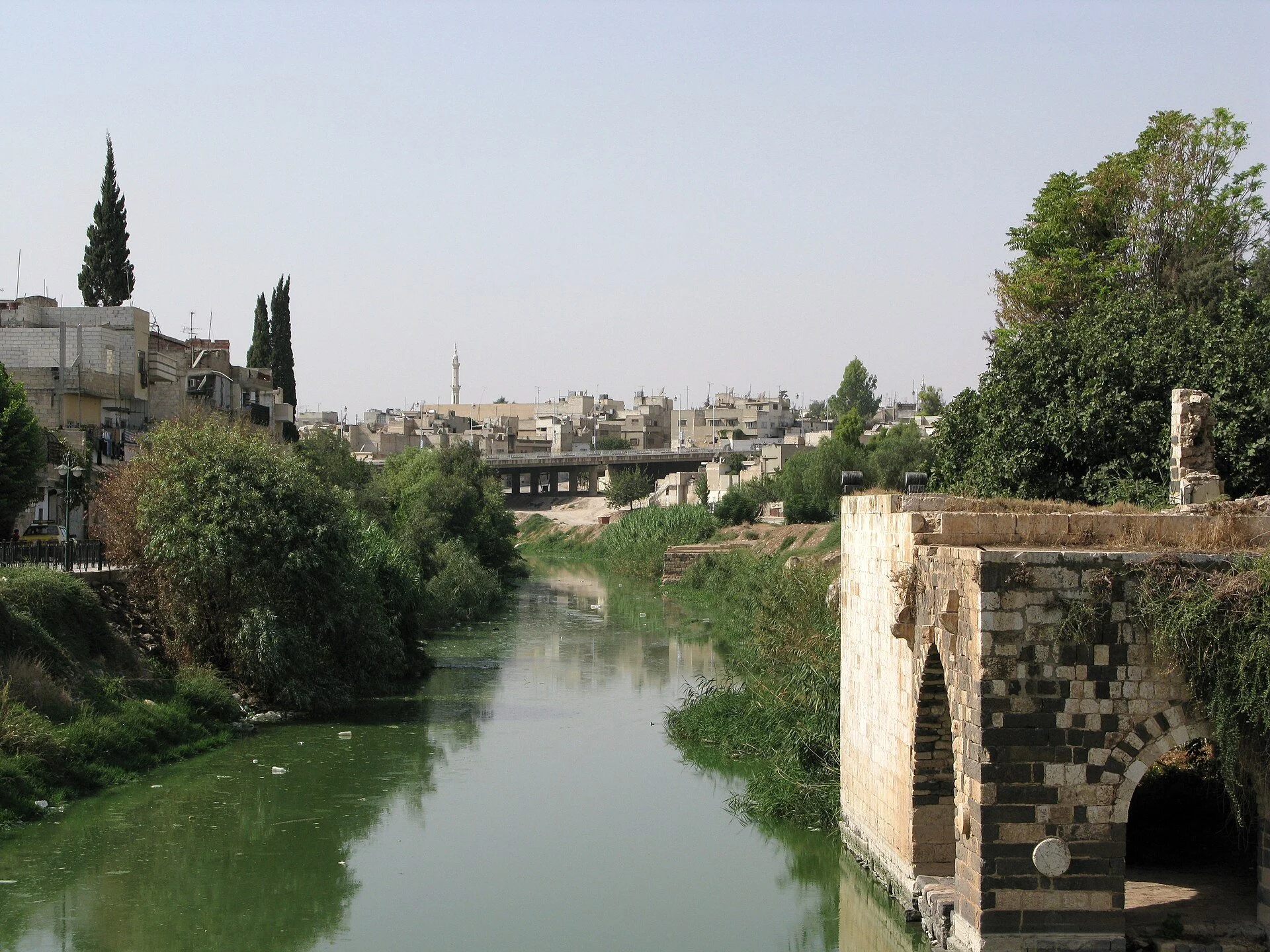
Orontes River in Hama, Syria — © Vyacheslav Argenberg, CC BY 4.0